What Is a Reloading Press?
Every reloading bench has a main character. Meet the reloading press.
A reloading press is a bench-mounted tool used to assemble ammunition from individual components. It provides the controlled leverage needed to move a cartridge case into and out of reloading dies, which perform specific operations during the reloading process.
For many reloaders, the press is the center of the bench. It does not work alone, however. A complete setup also includes the appropriate dies, components, measuring tools, and current, tested load data. The press helps make mechanical operations repeatable, but the operator remains responsible for careful setup, inspection, and attention.
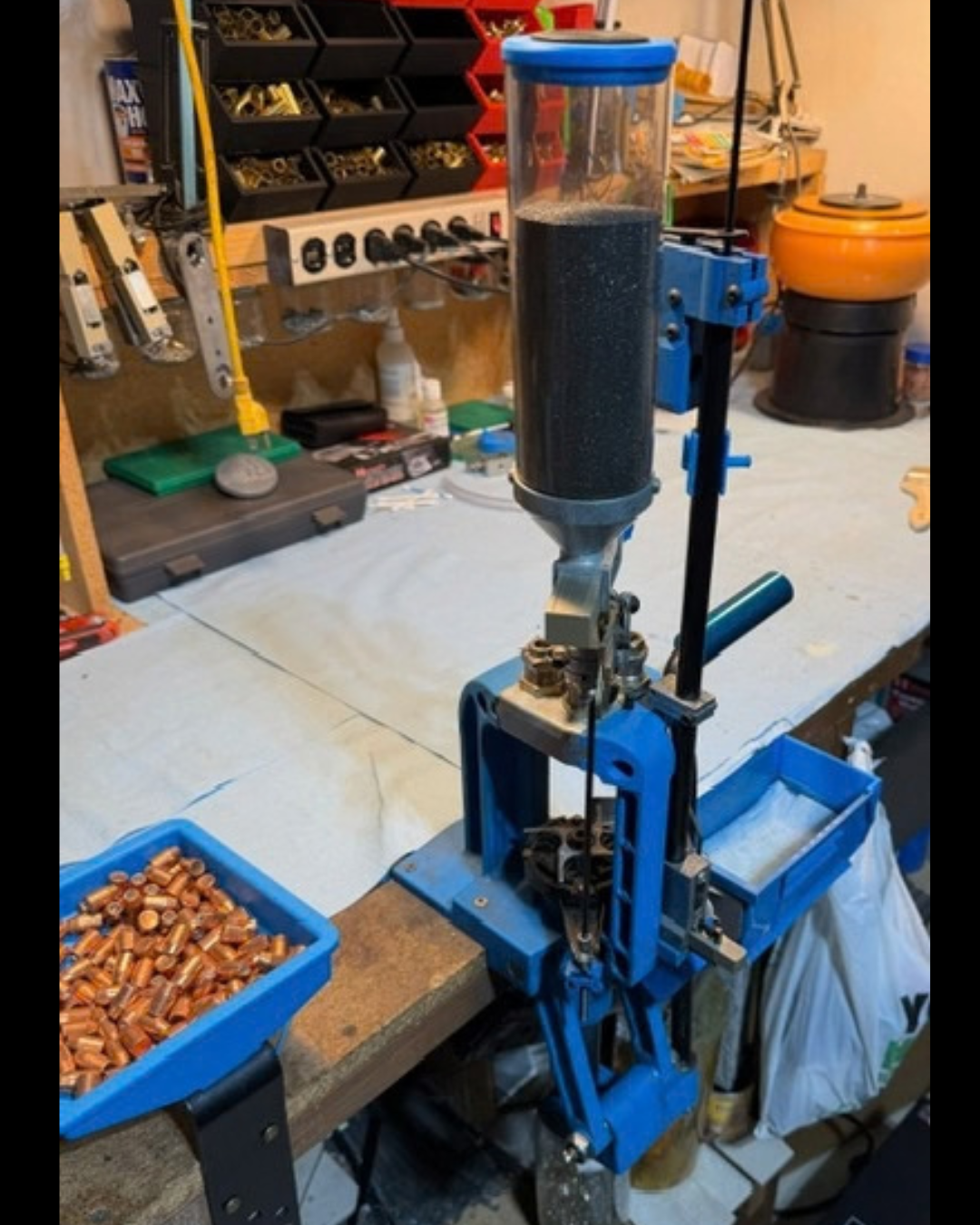
One of our own reloading presses: the Dillon RL 550.
What Does a Reloading Press Do?
A reloading press uses a handle-and-linkage system to raise and lower a ram. A cartridge case is held on the ram or in a shell plate, depending on the press design. When the handle moves, the case enters a die mounted above it.
For a visual example, see the schematic on page 3 of the Dillon RL 550B instruction manual.
Each die is designed for a particular job. At a high level, a reloading setup may use dies and related equipment to resize a fired case, seat a primer, charge the case with powder, seat a bullet, and, when appropriate, apply a crimp.
The press supplies the force and movement. The dies and other equipment determine what happens at each stage.
This repeatable motion is one reason a properly set-up press is valuable. It allows the user to perform the same operation consistently across multiple cases. But consistency does not mean automatic safety or guaranteed results. Reloaders still need to confirm that they have the correct components, follow the applicable equipment instructions, and use current, tested data from qualified manufacturers.
SAAMI defines reloading data as “a description of recommended relationships among reloading components.” In practice, that means handloaders should rely on published, tested data rather than guesswork or unverified recipes.
Reliable data typically comes from bullet manufacturers, powder manufacturers, and established reloading manuals. These sources test their combinations and publish results that reflect safe, repeatable performance. Using verified data helps ensure that each load is built on current, qualified information.
The Basic Types of Presses
Reloading presses generally fall into three broad categories:
Single-stage presses perform one operation at a time.
Turret presses hold multiple dies, making it easier to move between operations without reinstalling each die.
Progressive presses use multiple stations so different operations can occur during the same press cycle.
Each design supports a different workflow. Single-stage presses are often associated with a more segmented process, while progressive presses are designed to handle several operations in sequence. Turret presses fall between the two.
The right choice depends on the reloader’s equipment, intended use, available workspace, and preferred workflow. Watch for an upcoming blog comparing single-stage, turret, and progressive presses.
Reloaders often choose a press based on their volume, experience level, and workflow preferences. A single-stage press suits low-volume or precision-focused work and is often the best starting point for new reloaders. A turret press offers convenience for moderate volumes without the complexity of a progressive system. Progressive presses are designed for higher output and are typically used by experienced reloaders who want several operations to occur during each cycle.
A Press Is One Part of the Setup
A reloading press is an important tool, but it is not a substitute for an organized work area or careful habits. Before beginning any reloading task, users should confirm that their press, dies, shell holders or shell plates, and components are appropriate for the cartridge they intend to load.
Most setups also rely on basic supporting tools such as calipers, a powder scale, case lube when required, a primer-seating tool, and, for bottleneck rifle cartridges, a case trimmer. These tools help confirm measurements, maintain consistency, and support the individual operations performed on the press.
It also helps to keep the bench clear, maintain good lighting, and keep current data and notes close at hand. A simple, consistent workspace makes it easier to focus on the task in front of you.
For reloaders using compatible Dillon presses, purpose-built accessories can help keep commonly used tools and components organized around the bench. Explore MBS 3D Solutions’ reloading press accessories for custom-made parts designed for Dillon reloading setups.
The Bottom Line
A reloading press is the mechanical center of a handloading bench. It provides the controlled movement and leverage needed to use reloading dies and perform repeated cartridge-assembly operations.
Whether you use a single-stage, turret, or progressive press, the goal is the same: a deliberate, repeatable process supported by the correct equipment, current published data, and focused attention.
Frequently Asked Questions About Reloading Presses
What is a reloading press used for?
A reloading press provides the controlled movement and leverage needed to use reloading dies and perform repeated cartridge-assembly operations. It is the mechanical center of a handloading setup, but safe, reliable use also depends on the correct components, current published data, proper setup, and careful inspection.
What are the main types of reloading presses?
The three main types are single-stage, turret, and progressive presses. A single-stage press performs one operation at a time, a turret press holds multiple dies for easier transitions between operations, and a progressive press uses several stations during the press cycle. Each type supports a different workflow.
Does a reloading press make ammunition automatically?
No. A reloading press is a mechanical tool, not an automatic substitute for careful work. The person reloading must use suitable components, follow equipment instructions, rely on current, tested manufacturer data, and inspect the setup and finished ammunition as appropriate.
What accessories can I add to a reloading press?
Useful accessories depend on the press model and the reloader’s workspace. Compatible accessories can help keep tools, components, and commonly used items organized and accessible. Always confirm that an accessory is designed for your exact press model before ordering or installing it.